In the hospital and laboratory environments, anesthesia gas machine provides a complete anesthesia management solution by integrating gas delivery, ventilation support, and continuous physiological monitoring. The equipment measures oxygen saturation, airway pressures, and respiratory parameters, thus enabling anesthesiologists to react promptly to the demands of the patients. A precise control of anesthetic gases is guaranteed by integrated safety alarms and adjustable flow systems. anesthesia gas machine finds its utility in operating rooms, emergency care units, and laboratory-based clinical studies. Its dependable performance not only secures patient stability but also increases the efficiency of the procedure and facilitates uniform monitoring across various hospital settings.

anesthesia gas machine is frequently employed in the ICU to give controlled sedation and respiratory support to patients in serious condition. Critical patients who are mechanically ventilated usually need exact anesthetic management to alleviate stress and discomfort. The device makes it possible to perpetually modify ventilation parameters and anesthetic concentration according to the patient’s condition. Staff in the ICU make use of anesthesia gas machine to keep patients sedated during invasive interventions or durative respiratory support. This particular use emphasizes its significance outside the operating room, thus reaching the area of long-term critical care management.
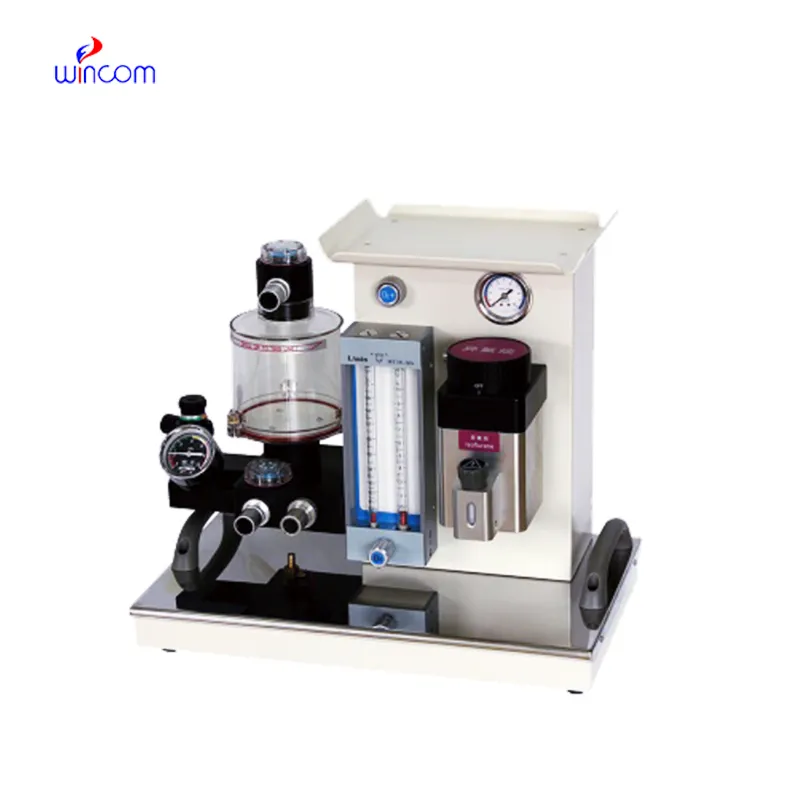
The anesthesia gas machine future is projected to concentrate on a better digital integration in hospital systems. The advanced connectivity will let anesthesia data to be automatically merged with electronic medical records and centralized monitoring systems. This will encourage sharing of data in real-time across operating rooms, ICUs, and laboratories. Better software interfaces might enable anesthesiologists to interpret respiration trends in a more effective manner. The smarter hospitals will lead to the anesthesia gas machine being a more connected device, thus enabling better patient care and the shared clinical decisions among departments.
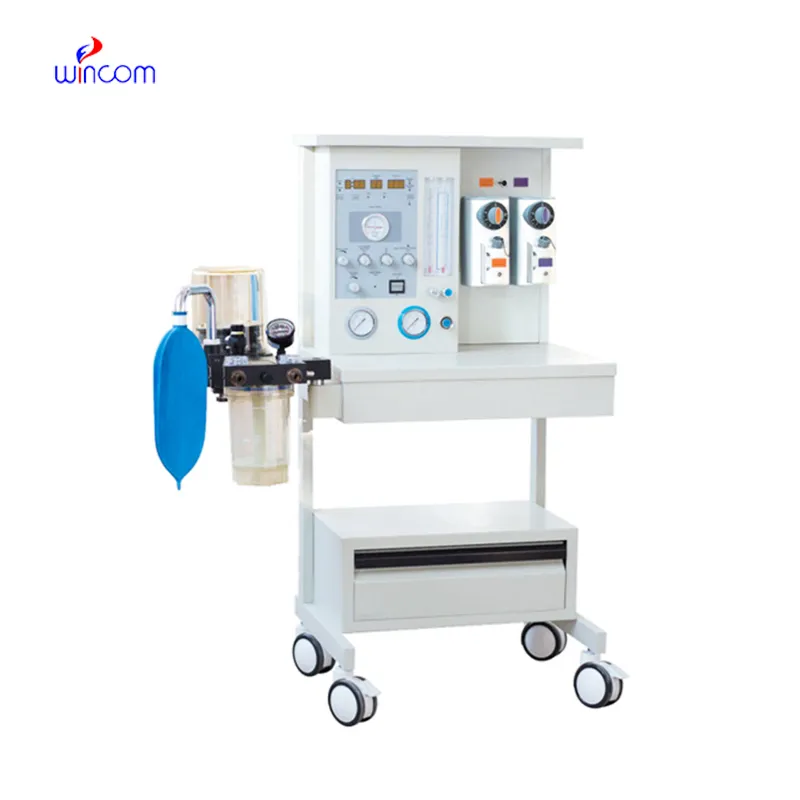
Alarm and monitoring systems in anesthesia gas machine need to undergo frequent verification. It is necessary to carry out the testing of audible and visual alerts to make sure that they are functional. These systems are essential to notify the healthcare providers regarding the patients' status changes. Making sure of trustworthy alarms is one way of protecting the patients during surgical and clinical procedures. Standard testing is one way to perpetuate trust in the alerting power of the device.
anesthesia gas machine is a crucial medical apparatus used in hospitals, intended to administer accurate anesthetic gases and at the same time, allow patient ventilation during surgery. It incorporates monitoring systems which constantly measure the oxygen levels, respiratory rate, and airway pressures, thus ensuring patient safety during the entire procedure. The device, which is made up of vaporizers, flow meters, and alarms, allows anesthesiologists to control sedation uniformly and react to different physiological situations. Its use goes from operating rooms to emergency departments and laboratory-based clinical studies, thus providing consistent performance for efficient anesthesia administration and facilitating good patient management in various hospital environments.
Q: What gases does the Anesthesia Machine make use of? A: The regular gases are oxygen, nitrous oxide, and volatile anesthetic agents. Q: Is the Anesthesia Machine suitable for long surgeries? A: Yes, it was designed to maintain stable anesthesia throughout long operations. Q: Under machine control how does the anesthesia concentration occur? A: The vaporizers dispense a precisely-measured amount of anesthetic gas to the patient. Q: Could the machine be used for pediatric patients? A: Yes, but only if the settings are modified by the experienced medical personnel. Q: Is there a built-in alarm system for the machine? A: Yes, alarms are present to alert the staff to changes in pressure, gas flow, or oxygen levels.
The water bath performs consistently and maintains a stable temperature even during long experiments. It’s reliable and easy to operate.
The delivery bed is well-designed and reliable. Our staff finds it simple to operate, and patients feel comfortable using it.
To protect the privacy of our buyers, only public service email domains like Gmail, Yahoo, and MSN will be displayed. Additionally, only a limited portion of the inquiry content will be shown.
We’re currently sourcing an ultrasound scanner for hospital use. Please send product specification...
We’re interested in your delivery bed for our maternity department. Please send detailed specifica...
E-mail: [email protected]
Tel: +86-731-84176622
+86-731-84136655
Address: Rm.1507,Xinsancheng Plaza. No.58, Renmin Road(E),Changsha,Hunan,China


 EN
 af
 es
 ar
 tr
 sw
 pt
 th
 ur
 bn
 ne
 vi
 km
 lo
 de
 ru
 fi
 nl
 fa
 fr
 ko