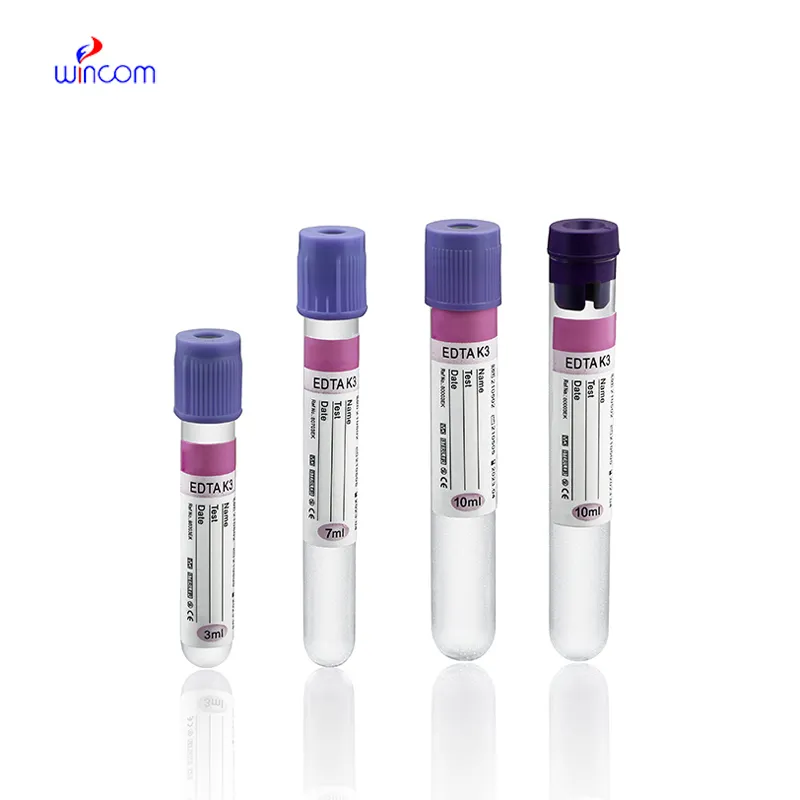
The structure of blood sample collection tubes has been improved to suit both clinical and laboratory applications. Sealing, sterilization, and pre-added substances keep blood samples in their most stable form. Besides, they are used in hospitals for several purposes such as preventing clotting, keeping cellular components alive, and facilitating accurate diagnostic tests. The standardization of their sizes and the color-coded caps used for them help in easy identification and also minimize pre-analytical errors. The integration of blood sample collection tubes with laboratory instruments like centrifuges and analyzers results in improved workflow and reliable results. These tubes are indispensable in both hospitals and research laboratories as they help maintain the accuracy and efficiency of the processes.

The use of blood sample collection tubes in emergency departments is vital for quickly taking blood samples in acute care situations. Immediate tests for coagulation, electrolytes, and blood gases are required for patients who have undergone trauma, are suffering from severe infections, or have heart problems. The use of color-coded caps allows the rapid selection of the right tube by the clinicians, while the vacuum-based designs allow for safe and efficient sample collection. Tubes are allowed to be directly transported to the hospital laboratories for prompt analysis. The blood sample collection tubes application guarantees that the essential blood samples would be unpolluted and well-preserved, hence, making the rapid diagnostic decision-making process that could save the lives of patients in the high-pressure hospital environments.
blood sample collection tubes might witness inventive strides in additive technology enabling multi-functional testing from just one blood collection. The tubes could be designed in such a way that they would have substances that maintain the samples for both hematology and biochemical assays, hence making it unnecessary to have multiple blood draws. The hospitals and laboratories will enjoy smooth operation, less patient discomfort, and reduced pre-analytical variability as their main advantages. Cutting-edge monitoring systems might keep an eye on sample conditions and warn personnel in case of any changes. The next blood sample collection tubes will not only magnify operational efficiency but also improve diagnostic reliability thus paving the way for integrated hospital laboratory operations and modern clinical research protocols.

The proper handling of blood sample collection tubes starts by storing them under the right conditions before usage. To maintain the stability of the additives, the tubes should be stored in a clean and dry place, away from direct sunlight and high or low temperatures. Hospitals and laboratories are required to strictly adhere to the manufacturer's recommendations concerning shelf life and storage orientation. A constant check on the integrity of the packaging is a good practice that minimizes the contamination risk. Staff should see to it that they only touch tube openings and caps when absolutely necessary during the daily use. Proper organizing of storage and stock rotation according to expiry dates will guarantee that the quality of the blood collected in clinical and laboratory settings will be no different from that of the previous one.
blood sample collection tubes serve as the primary instruments in the laboratory of hospitals that guarantee safe and efficient blood sample collection. They are made to prevent sample degradation, and very often, depending on the tests, they come pre-filled with anticoagulants or clot activators. The tubes are color-coded and sized in a standard way to prevent confusion in identification. In hospital settings, proper use of blood sample collection tubes leads to precise laboratory outcomes and at the same time, cuts down the risk of contamination. These tubes are indispensable in the hands of laboratory professionals and phlebotomists during a variety of diagnostic procedures, ranging from the simple complete blood count to the complex biochemical tests, thereby making them an integral part of hospital diagnostic workflows.
Q: What is the role of vacuum technology in Blood Collection Tubes? A: Enabling a gentle but efficient controlled access to collect blood. Q: Is it possible that Blood Collection Tubes may affect the findings of the results in the laboratory? A: The introduction of Blood Collection Tubes negates some opportunities for sample integrity that supports laboratory results, assuming the correct tube usage. Q: Are Blood Collection Tubes suitable for long-distance transportation? A: They are indeed, with proper handling, storage, and keeping the sample integrity intact during transportation. Q: What steps does the laboratory follow to limit the occurrences of errors related to Blood Collection Tubes? A: Such measures would involve a checklist for collecting blood tubes, separate place for test tubes, all needles, and components (color-coded), shade for answered tubes with samples that are white for identification, identifying sample containers, reordering tube trays, discard policies, labeling, color codes, or sample. Q: What is required for Blood Tube manufacturing? A: The production process must comply with the rules and regulations applicable to medical devices and diagnostics?
The delivery bed is well-designed and reliable. Our staff finds it simple to operate, and patients feel comfortable using it.
The hospital bed is well-designed and very practical. Patients find it comfortable, and nurses appreciate how simple it is to operate.
To protect the privacy of our buyers, only public service email domains like Gmail, Yahoo, and MSN will be displayed. Additionally, only a limited portion of the inquiry content will be shown.
We’re currently sourcing an ultrasound scanner for hospital use. Please send product specification...
Could you share the specifications and price for your hospital bed models? We’re looking for adjus...
E-mail: [email protected]
Tel: +86-731-84176622
+86-731-84136655
Address: Rm.1507,Xinsancheng Plaza. No.58, Renmin Road(E),Changsha,Hunan,China


 EN
EN
 af
af
 es
es
 ar
ar
 tr
tr
 sw
sw
 pt
pt
 th
th
 ur
ur
 bn
bn
 ne
ne
 vi
vi
 km
km
 lo
lo
 de
de
 ru
ru
 fi
fi
 nl
nl
 fa
fa
 fr
fr
 ko
ko