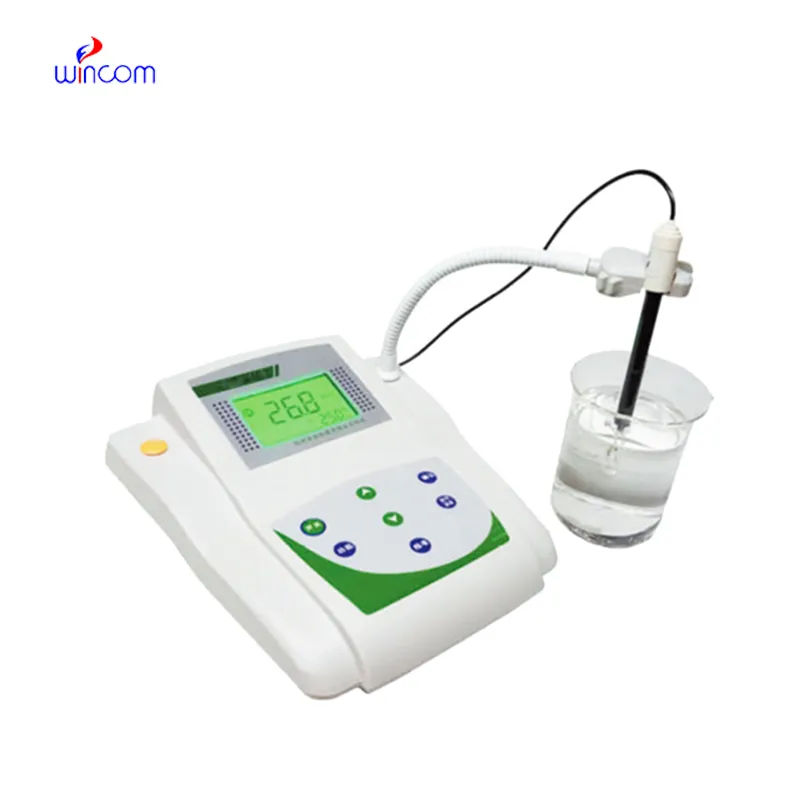
Crafted for performance and dependability, the heating circulator water bath provides dependable temperature control with an intuitive interface. It has a rugged outer casing and stainless steel inner tank to withstand corrosion and contamination. The heating circulator water bath offers rapid heat-up and uniform temperatures across the chamber, minimizing the possibility of sample destruction. Its display screens allow for real-time monitoring, facilitating precise adjustment during the experiment. Low noise operation with advanced thermal sensors, the heating circulator water bath guarantees stability and reliability during prolonged laboratory use.

The heating circulator water bath is a necessary instrument for temperature-sensitive procedures. In molecular biology, it supports enzyme reactions such as PCR preparation and DNA extraction. It is also widely employed in protein denaturation, tissue incubation, and thawing of samples. The heating circulator water bath facilitates uniform heating, which is necessary when handling biological materials with stable requirements. Applied in industrial research for viscosity measurement and material analysis, its versatility makes the heating circulator water bath apply in both research and production settings requiring precise temperature control.
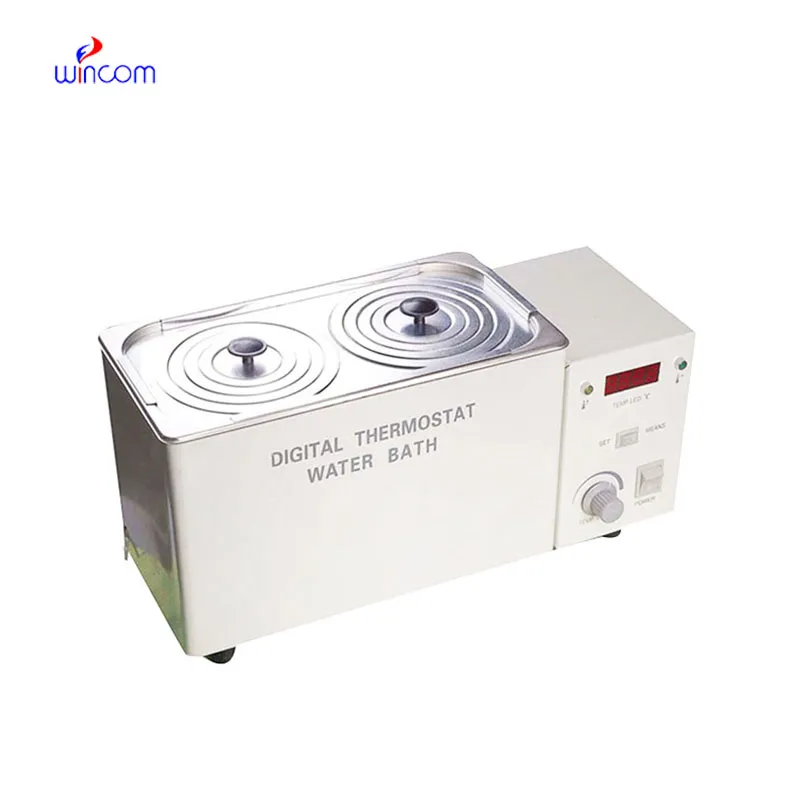
The future for the heating circulator water bath is more precision and more automation. Future models will incorporate improved digital control systems through the advancement in sensor technology, providing even more precise temperature performance. The heating circulator water bath will be integrated into smart laboratory networks to permit remote monitoring and data logging through cloud-based systems. The heating circulator water bath will also include eco-friendly materials and energy-saving heating systems. Though labs themselves are rapidly becoming more advanced, the future generation of the heating circulator water bath will emphasize flexibility, end-user safety, and integration transparency with current research pipelines.

Keeping the heating circulator water bath in good condition enhances efficiency and safety. The users must periodically clean the inner chamber to remove mineral residues or deposits. Clean with distilled or pure water to prevent buildup and allow faultless function. Regularly check temperature calibration for accuracy consistency. Never fill the bath over capacity and make sure the lid seal is not damaged. Keep the heating circulator water bath drained, dry, and in a dustless area when they are not being used to prevent corrosion and contamination.
The heating circulator water bath is a device that is normally applied to heat samples gradually and uniformly under temperature regulation. The instrument is an essential part of laboratories for offering stable thermal conditions for reactions, culture media preparation, and activation of enzymes. Water circulating within the heating circulator water bath facilitates the transfer of heat uniformly to prevent overheating. Most models come with digital readouts to allow for precise temperature measurement and simple adjustment. The heating circulator water bath can accommodate a broad scope of scientific uses where precise control of temperature improves experimental accuracy and replicability.
Q: Can a water bath be used for enzyme incubation? A: Yes, water baths are frequently used for enzyme incubation, as they provide precise and stable temperature conditions necessary for biological reactions. Q: How does a digital water bath differ from an analog one? A: A digital water bath offers programmable controls and precise temperature readings, while analog models rely on manual adjustments and thermometers. Q: What maintenance steps extend the life of a water bath? A: Regular cleaning, using distilled water, checking the thermostat, and drying the chamber after use all help maintain performance. Q: Why do some water baths have lids or covers? A: Lids help reduce heat loss, prevent contamination, and minimize evaporation, maintaining consistent internal temperatures. Q: What should be done if a water bath fails to heat properly? A: Inspect the power supply, thermostat, and heating element; if the issue persists, discontinue use until professional servicing is performed.
I’ve used several microscopes before, but this one stands out for its sturdy design and smooth magnification control.
The water bath performs consistently and maintains a stable temperature even during long experiments. It’s reliable and easy to operate.
To protect the privacy of our buyers, only public service email domains like Gmail, Yahoo, and MSN will be displayed. Additionally, only a limited portion of the inquiry content will be shown.
We’re looking for a reliable centrifuge for clinical testing. Can you share the technical specific...
Could you share the specifications and price for your hospital bed models? We’re looking for adjus...
E-mail: [email protected]
Tel: +86-731-84176622
+86-731-84136655
Address: Rm.1507,Xinsancheng Plaza. No.58, Renmin Road(E),Changsha,Hunan,China


 EN
 af
 es
 ar
 tr
 sw
 pt
 th
 ur
 bn
 ne
 vi
 km
 lo
 de
 ru
 fi
 nl
 fa
 fr
 ko